
Destinations
Sri Lanka Holds More Than Can Be Seen. We Help You Feel What Matters Most.
Sri Lanka’s geography is compact but its depth is immense – ancient cities, misty highland plateaus, wildlife-rich national parks, and two distinct coastlines that change personality with the seasons. SiriLanka Tours knows each of these regions from the ground up, bringing genuine local knowledge to every destination in this portfolio.
Two Thousand Years of Civilisation. Still Standing. Still Breathing.
Sri Lanka’s heritage landscape is remarkable not simply for its age but for its continuity – these ancient cities are still prayed at, maintained, and lived in by communities for whom they remain as relevant today as when they were first built. SiriLanka Tours approaches every heritage site with the cultural depth that helps travellers understand not just what they are looking at, but why it still matters.

Yapahuwa & Rajagala
Yapahuwa served briefly as the royal capital in the late 13th century, and its surviving ornamental staircase – carved with scrollwork and figure work of remarkable delicacy – is one of the finest examples of late Sinhalese architectural carving on the island. Rajagala, in the Eastern Province, is a forest monastery of a completely different character: ancient stupas and meditation chambers scattered across a jungle hillside accessible only on foot, with the forest having reclaimed most structures over centuries. Both sites reward the traveller who seeks the difference between visiting a heritage destination and actually finding one.

Kandy
Sri Lanka’s last royal capital endured as the final independent Sinhalese kingdom because its highland geography and its cultural institutions made it genuinely difficult to dismantle. The Sri Dalada Maligawa’s three daily puja ceremonies – drumming filling the outer courts with a sound both martial and devotional – remain among the most moving ritual experiences on any Sri Lanka itinerary. Kandy is also the gateway to the highland tea country and the departure point for the most celebrated train journey in Asia.
Polonnaruwa
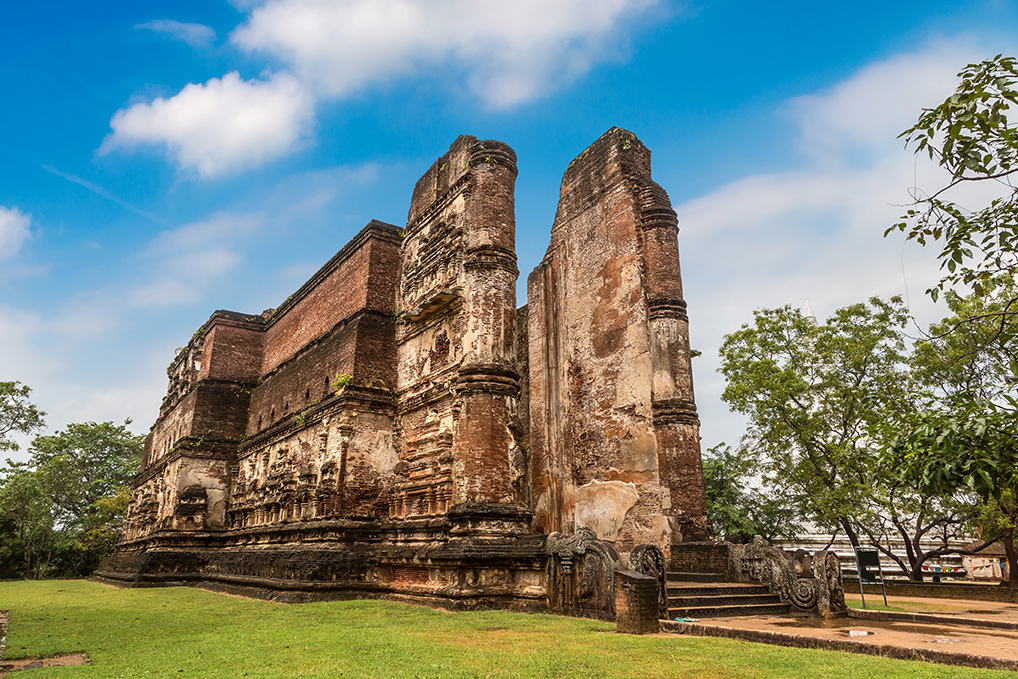
When the Sinhalese kings rebuilt their capital at Polonnaruwa in the 10th century CE, they produced some of the finest architecture and sculpture in Sri Lankan history alongside one of the ancient world’s great irrigation achievements. The Gal Vihara’s four colossal Buddha figures – carved from a single granite face with compositional mastery that reflects both Theravada theology and Mahayana aesthetics – are the period’s finest artistic statement. The Parakrama Samudra reservoir, still a working irrigation system 800 years after its construction, is the pragmatic achievement that runs alongside the spiritual ones.

Anuradhapura
Sri Lanka’s first great capital was simultaneously a royal seat, an agricultural engineering masterwork, and the most important centre of Theravada Buddhist scholarship in the ancient world for close to a thousand years. The Sri Maha Bodhi – grown from a cutting of the original Bodhi tree and tended without interruption since 288 BCE – is the oldest documented living human-planted tree on earth and still the focal point of daily pilgrimage. Anuradhapura is best understood not as an archaeological site but as a sacred city that happens to be ancient.
Sigiriya & Dambulla
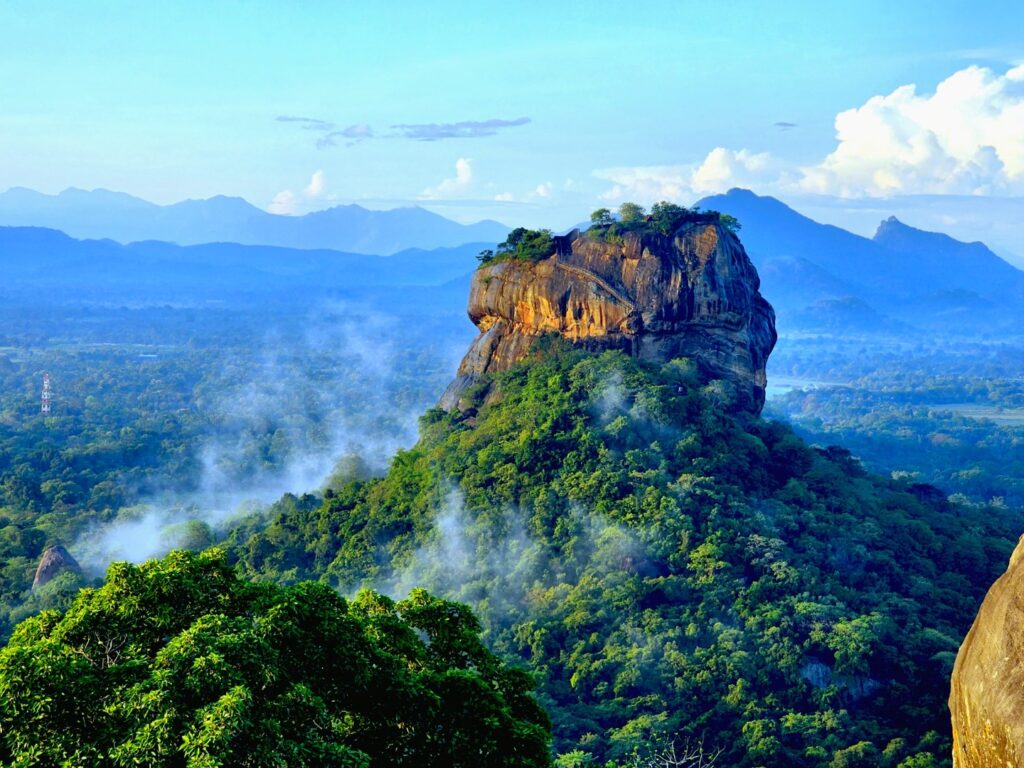
King Kashyapa’s 5th-century palace on a volcanic monolith is one of the most ambitious acts of royal world-building in the ancient world – formal water gardens, frescoed cliff faces, and a summit panorama across the Cultural Triangle plain all combined into a single extraordinary statement. Dambulla’s five granite caves tell a quieter but equally important story: twenty-two centuries of uninterrupted Buddhist worship have layered the interiors with paintings and sculpture spanning every stylistic period from the 1st century BCE to the present. Together in a single day, they reveal the full range of Sri Lanka’s ancient visual culture – monumental and intimate, royal and devotional.
Sri Lanka's Coast Is Never the Same Place Twice.
The southwest shore is at its finest between November and April; the east coast opens from May through September with different light, clearer water, and a completely different atmosphere. SiriLanka Tours programmes coastal stops according to the actual conditions at each location during your specific travel months.

Passikudah
Passikudah’s reef creates a vast, protected shallow lagoon of extraordinary clarity – water that remains at a walkable depth for several hundred metres, in a luminous pale turquoise that deepens to cobalt at the reef line. These conditions are as safe as a swimming pool and as beautiful as anywhere on the island’s coastline, making it one of Sri Lanka’s most photogenic and most accessible east coast destinations. The resort development around the bay is restrained enough to preserve the natural character that makes it worth visiting.

Trincomalee
Trincomalee’s natural harbour – one of the finest deep-water anchorages in the Indian Ocean – gave the city strategic significance to successive colonial powers, and the resulting layers of Dutch, British, and Portuguese infrastructure remain visible in the fortifications and colonial-era architecture around the bay. The beaches of Nilaveli and Uppuveli to the north are wide, white-sand, and uncrowded by the standards of any comparable tropical Asian coastline. The Koneswaram Temple on Swami Rock, an ancient Hindu shrine on a headland directly above the harbour, is one of Sri Lanka’s most dramatically positioned sacred sites.
Arugam Bay
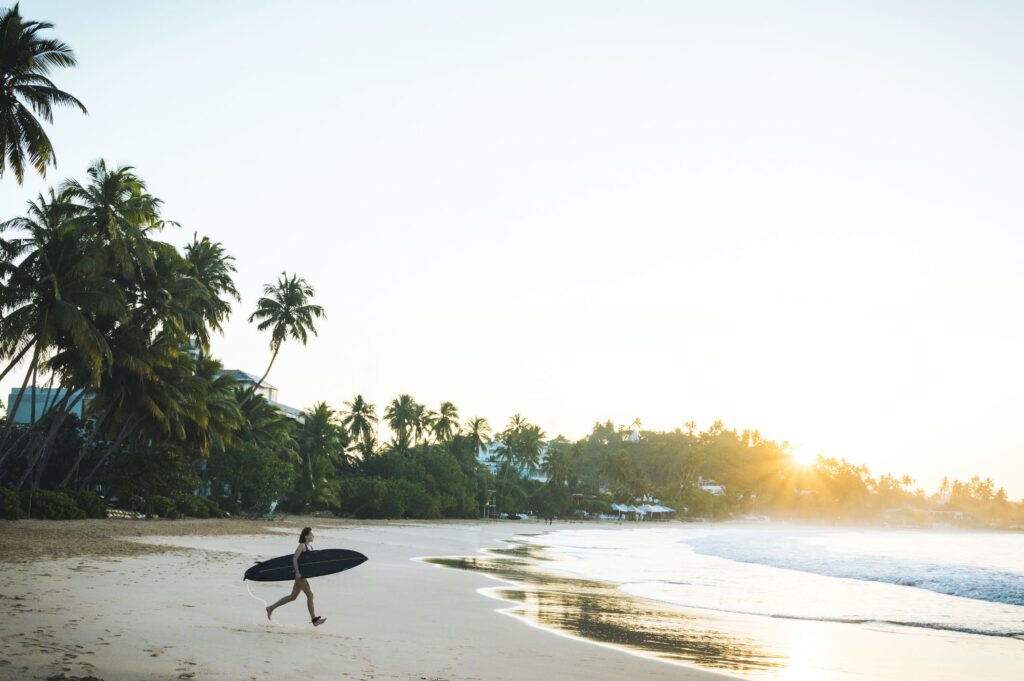
Arugam Bay’s right-hand point break has been understood by the international surf community since the 1970s as one of the finest in the Indian Ocean – consistent, well-shaped, and producing long rides between May and October when the east coast season is at its peak. The wider landscape adds genuine depth: the Pottuvil lagoon to the north and Kumana National Park to the south bring wildlife and ecological richness that extends the destination well beyond surfing. SiriLanka Tours incorporates A-Bay into east coast itineraries as a multi-dimensional stop rather than simply a surf destination.
Hiriketiya
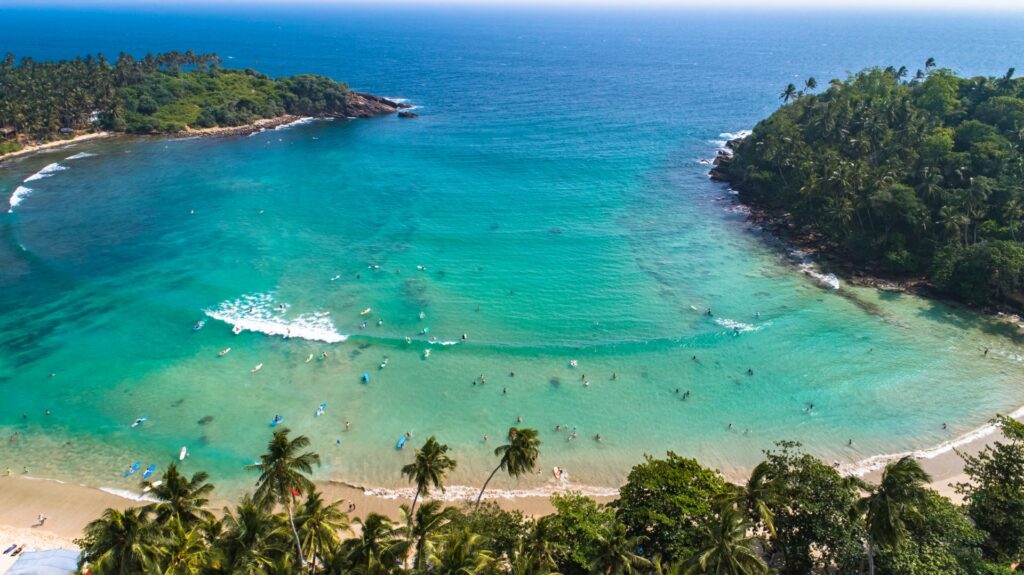
Hiriketiya is a near-perfect horseshoe bay where jungle reaches the waterline and the reef-fringed water suits beginner and intermediate surfers without the commercial scale of better-known surf destinations. The village around the bay is small, owner-run, and genuinely unhurried – accommodation and food are personal rather than corporate. It is the kind of place that most travellers find by recommendation rather than by plan, and the fact that it still feels found rather than packaged is its most valuable quality.

Polhena
A reef-protected bay just south of Matara where a resident population of green and loggerhead turtles feeds on the reef grass in the shallows – genuinely wild animals using their natural habitat, not a feeding-station attraction. The reef’s health is significantly better than many southwest coast equivalents because it receives far fewer visitors, and the water clarity that results makes Polhena one of the finest snorkelling environments on the southern coast. SiriLanka Tours recommends it for travellers who prioritise the quality and authenticity of the marine encounter over the profile of the destination.

Mirissa
The deep-water shelf off Mirissa brings blue whales within relatively short boat range during their November-to-April migration, making this one of the most productive whale-watching locations in the world for that season. The typically calm morning seas of the south coast season create sustained observation conditions that SiriLanka Tours builds into its itineraries as one of the island’s genuinely extraordinary wildlife experiences. On land, Mirissa’s small horseshoe bay and relaxed waterfront make it one of the south coast’s most enjoyable overnight stops in any month.

Unawatuna
Unawatuna’s horseshoe bay – curved between two headlands just south of Galle – gives it reef-protected swimming conditions that most Sri Lanka beaches cannot match, with sea turtles resting in the shallows with enough regularity to make sightings realistic rather than hopeful. The proximity to Galle Fort makes a natural pairing: a morning among the Dutch colonial ramparts followed by an afternoon in warm, sheltered water is one of the south coast’s most satisfying combinations. The bay’s physical beauty has retained its appeal through decades of traveller appreciation.

Hikkaduwa
Hikkaduwa’s reef has been the reason for its popularity long before the town around it developed – a coral system within the Hikkaduwa National Park that supports marine turtles, parrotfish, and diverse reef fish accessible by snorkel directly from the shore. The reef’s status as a protected area limits the worst extractive pressures, though responsible snorkelling practice remains essential to its continued health. Above the waterline, Hikkaduwa has the easy energy of a town that has been well-regarded on the independent traveller circuit for decades.

Bentota
The Bentota River estuary creates an unusual coastal geography: a calm, sheltered waterway separated from the open ocean by a narrow sand bar, supporting both water sports and access to the Madu River wetland just inland. The beach on the ocean side is one of the longest and most consistently swimmable on the southwest coast. The transition from beach and open water to the quiet, bird-rich mangrove channels of the Madu River system requires only twenty minutes of driving, making Bentota the west coast’s most ecologically varied coastal stop.

Negombo
Negombo has been receiving travellers longer than most famous tourist destinations have existed – Portuguese missionaries, Dutch canal engineers, and British colonial administrators each left their mark on a town shaped most fundamentally by its working fishing community. The Dutch canal system is both living infrastructure and historical document, and the Catholic churches concentrated along the coastal strip give Negombo an architectural character found nowhere else in Sri Lanka. The pre-dawn fish market on the beach – organised, fast, and centuries-old in its practice – is one of the most genuinely local encounters on the west coast.
The Wildlife Here Rewards Patience and Punishes Rushing.
Sri Lanka’s national parks span the island’s major habitat zones – from coastal scrubland and lagoon in the south to deep forest villu systems in the northwest and remote interior wilderness in the east. SiriLanka Tours coordinates safaris with experienced trackers who know individual park ecosystems well enough to bring real field intelligence to every game drive.
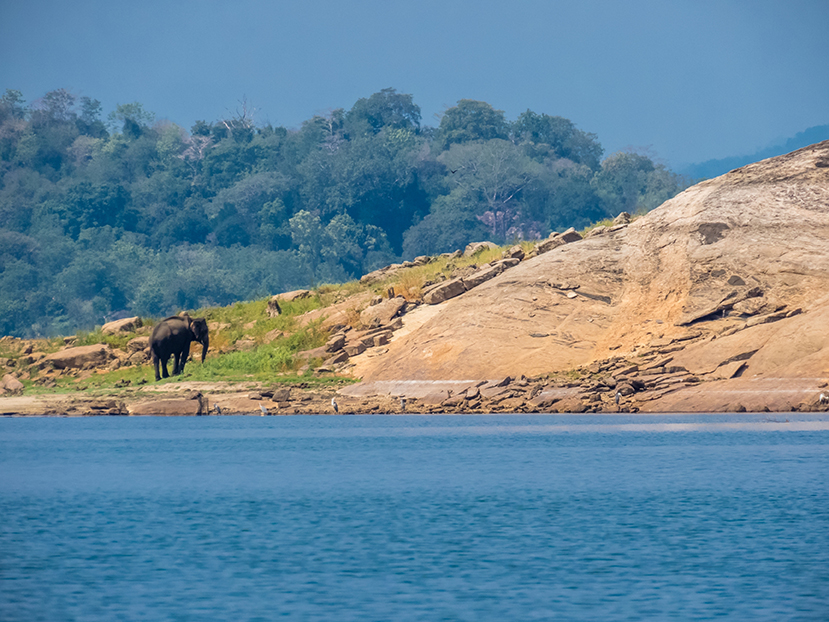
Senanayake Samudra Boat Safari – Gal Oya
The Gal Oya boat safari on the Senanayake Samudra reservoir offers something genuinely unavailable anywhere else in Sri Lanka: wild Asian elephants observed swimming between forested islands in the open water of a vast inland lake. The sight of a family herd crossing open water – calves swimming alongside adults, the matriarch reading the current – is one of those wildlife encounters that remains vividly memorable long after more famous sightings have blurred together. The park’s extreme remoteness keeps visitor numbers very low, and the behavioural freedom that results in the wildlife is immediately apparent.

Sinharaja Rainforest
Sinharaja is Sri Lanka’s ecological apex – a UNESCO World Heritage primary rainforest with an endemic tree species proportion exceeding 60 percent and bird species found nowhere else on earth. Walking its interior with a trained naturalist guide is a process of continuous revelation at every scale, from the mixed-species bird flocks moving through the canopy overhead to the endemic frogs and geckos in the leaf litter underfoot. The mixed-species foraging flocks unique to this forest – where multiple endemic bird species travel and feed together in coordinated groups – are one of the most extraordinary wildlife phenomena in South Asian natural history.

Wasgamuwa National Park
Wasgamuwa covers the river valleys and dry zone plains of the North Central Province in a landscape that few visitors to the island ever see – a forested interior wilderness with substantial elephant populations, a healthy leopard community, and birdlife across riverine and dry zone habitats that the heavily visited southern parks miss entirely. The quality of solitude here is its most distinctive asset: game drives produce none of the jeep-queue dynamics that peak-season Yala involves, and encounters carry a corresponding authenticity. SiriLanka Tours includes Wasgamuwa for guests who want to understand what Sri Lanka’s wildlife landscape looks like before tourism reshapes how it presents itself.
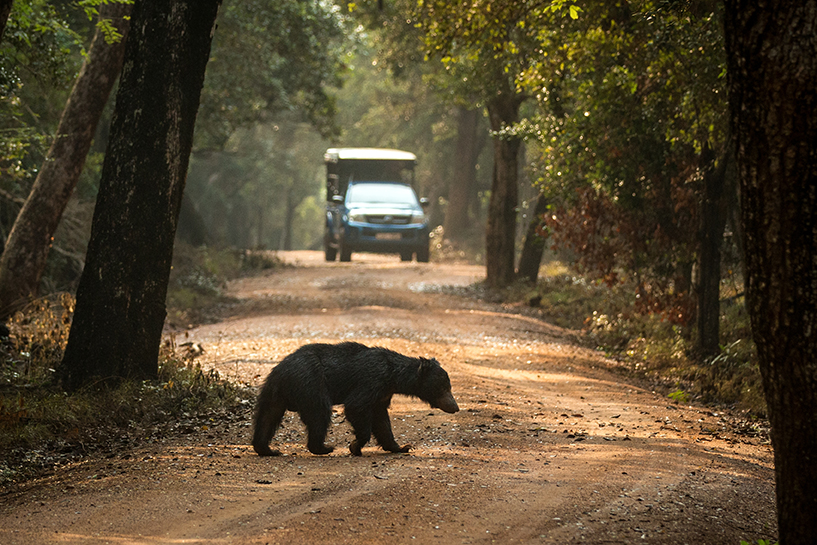
Wilpattu National Park
The villus of Wilpattu – naturally occurring lake basins found nowhere else in Sri Lanka in this number and ecological concentration – draw elephants, buffalo, deer, crocodiles, and vast communities of waterbirds to their edges in a setting of genuine visual grandeur. The park’s lower visitor numbers compared to Yala mean that leopard encounters here carry a quality of wildness that more crowded environments cannot provide, with the intervals between sightings filled by forest silence rather than queuing vehicles. For the traveller who values depth of encounter over frequency, Wilpattu is Sri Lanka’s finest safari environment.

Yala National Park
Yala is Sri Lanka’s most celebrated wildlife destination because it delivers on its central promise with consistency: the world’s highest leopard density per unit area, in a scrubland, lagoon, and grassland habitat that gives these cats a visibility and approachability that denser forests cannot match. The leopards of the western zone have grown accustomed to safari vehicles without losing the fundamental character of their natural behaviour – they hunt, rest, and move through their territories in ways that produce the most extended and rewarding cat encounters in Asia. SiriLanka Tours enters Yala at the optimal hour with trackers whose knowledge of individual resident cats’ ranges makes a measurable difference to sighting quality.
Go Higher. The Island Reveals Different Truths From Different Altitudes.
The central highlands are defined by tea estates, dramatic escarpments, endemic cloud forests, and the network of trails and mountain railways that make the region accessible at whatever level of physical engagement a traveller brings. SiriLanka Tours balances active highland exploration with the contemplative quality that the cool mountain air and tea country beauty naturally encourages.

Kanneliya Rainforest
Kanneliya is a biosphere reserve in the Galle District whose lowland rainforest provides a complementary ecological experience to highland Sinharaja – the same fundamental richness of endemic species but in a different habitat type, at a lower altitude, and with a trail network less formalised than Sinharaja’s visitor pathways. Several endemic bird species that prove difficult to find in the heavily birded Sinharaja core zone are more accessible in Kanneliya’s different forest structure, and the stream amphibian diversity of its seasonal watercourses is exceptional. SiriLanka Tours includes Kanneliya for nature-focused southern itineraries where travellers’ interest in Sri Lanka’s endemic biodiversity extends beyond the headline reserves.

Adam’s Peak – Sri Pada
Adam’s Peak is the most universally venerated mountain in Sri Lanka – its sacred footprint at the summit is claimed by Buddhist, Hindu, Christian, and Muslim traditions, making the December-to-April pilgrimage season one of the most remarkable interfaith convergences in Asia. The night climb begins in the early hours so that the summit is reached at dawn, when the mountain casts its perfect triangular shadow across the cloud layer below in one of Sri Lanka’s most singular natural phenomena. The pilgrim trail community – lit all night, punctuated by warm tea stalls, and animated by people who have made this ascent annually for decades – is itself a cultural encounter of the first order.

Knuckles Mountain Range
The Knuckles Range encompasses cloud forest, sub-montane wet forest, open grassland, and the agricultural landscapes of traditional mountain villages in a highland area whose biodiversity is exceptional even by Sri Lankan standards. Endemic reptile and amphibian species, highland bird species found nowhere at lower elevations, and a medicinal plant community that has sustained traditional healthcare in surrounding villages for centuries are all present within a relatively compact geographic area. SiriLanka Tours coordinates multi-day trekking experiences with local specialist guides whose combined knowledge of the range’s trails, ecology, and community life creates a genuinely educational and culturally engaged highland experience.

Horton Plains
Horton Plains is Sri Lanka’s most unusual landscape – a montane plateau of open grassland and cloud forest at over 2,000 metres where the ecological character, temperature, and atmosphere are completely unlike anything at lower elevations. The walk to World’s End must be completed before mid-morning: the cliff edge where the plateau drops 880 metres to the southern plains is fully visible only in the clear early hours, and the daily cloud that moves in from the south reduces the panorama to white opacity within minutes of its arrival. Baker’s Falls, midway along the circuit, descends through a cloud forest glade whose endemic bird community – the Whistling Thrush, Yellow-eared Bulbul, Dull-blue Flycatcher – makes the walk ornithologically productive at every step.
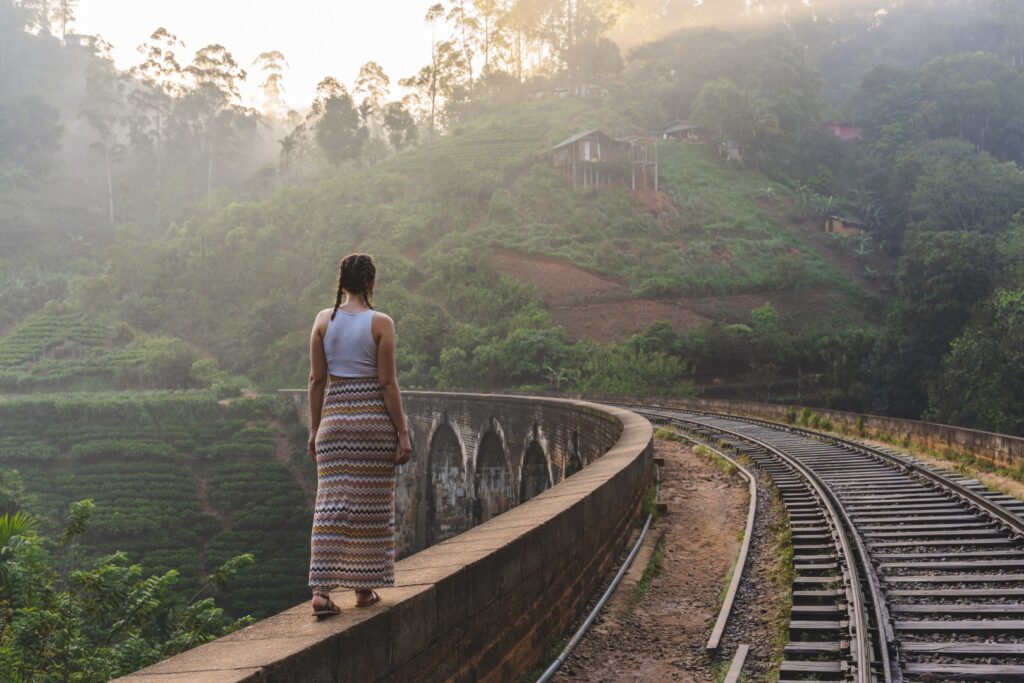
Ella
Ella sits in a natural gap in the southern highland escarpment – the land dropping away toward the lowland plains in a series of receding ridgelines visible from the village’s cafes and trail-side viewpoints, creating a sense of elevation and openness that enclosed highland valleys do not offer. The Nine Arch Bridge, built in 1921 entirely without steel, is best understood as part of the railway system it belongs to rather than a standalone subject, and watching the hill country train cross it is one of those travel moments that consistently justifies the timing effort required to see it. Little Adam’s Peak, reached by a 45-minute trail through active tea estate rows, provides a panorama of the Ella Gap accessible to most fitness levels and rewarding throughout the entire ascent.
Sri Lanka Rewards the Traveller Who Slows Down Enough to Notice.
Not every remarkable destination announces itself with famous photographs and a full tourism infrastructure. Some of the island’s most meaningful stops require slightly more intention to reach and reward the arrival with a quality of ecological, historical, or atmospheric experience that the standard circuit simply cannot provide.
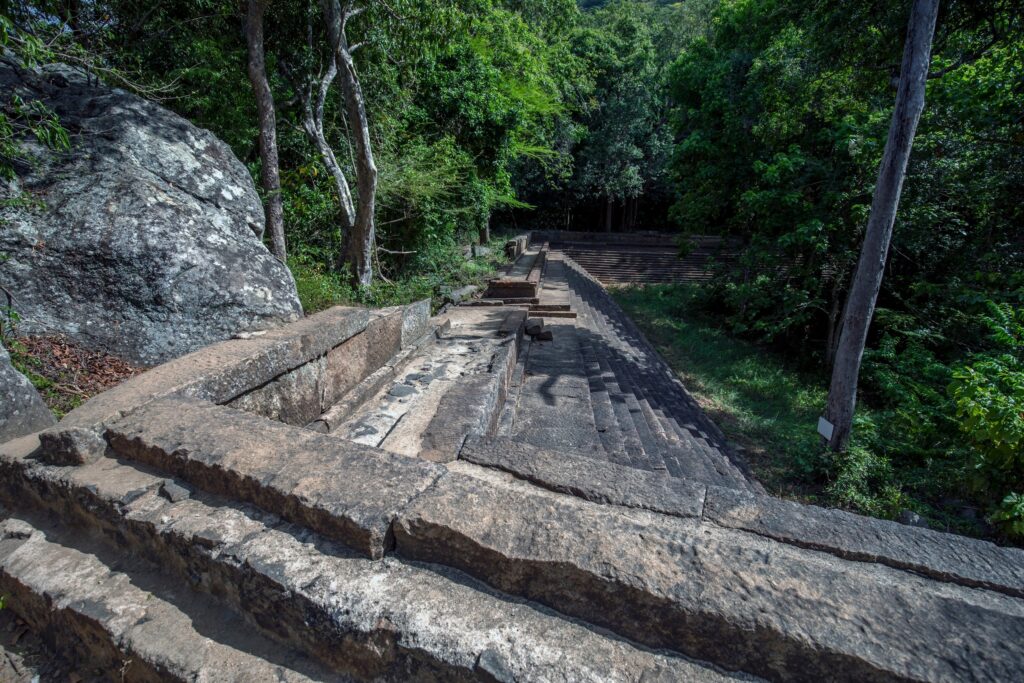
Ritigala Forest Monastery
Ritigala was built by Pamsukulika forest monks – ascetics who deliberately rejected the wealth and royal proximity of the great monasteries of Anuradhapura and chose instead the rigorous discipline of forest solitude, constructing their meditation platforms and library halls on a remote granite hillside in the dry zone interior. The ruins of those structures are still visible beneath the medicinal forest that has grown over them since the monastery’s abandonment in the 11th century, their stone pathways still connecting platforms and pavilions in an arrangement that makes the meditative logic of the complex legible even in its ruined state. The effort required to reach Ritigala is, from the SiriLanka Tours perspective, entirely appropriate to a site whose historical identity is founded on the value of the journey undertaken in the spirit of genuine seeking.

Madolduwa
Madolduwa is a river island in the Kalu Ganga south of Ratnapura – entirely undeveloped, largely unknown on the standard travel circuit, and remarkable precisely because of both those facts. Overnight stays here place guests within a stretch of largely intact lowland wet zone forest, where the sounds of the ecosystem at dusk and through the night – endemic frogs, cicadas, occasional night birds – create an acoustic environment of a completeness that no developed nature resort can replicate. SiriLanka Tours includes Madolduwa for guests who specifically want to experience Sri Lanka’s natural environments in their most unmediated and genuinely wild form.
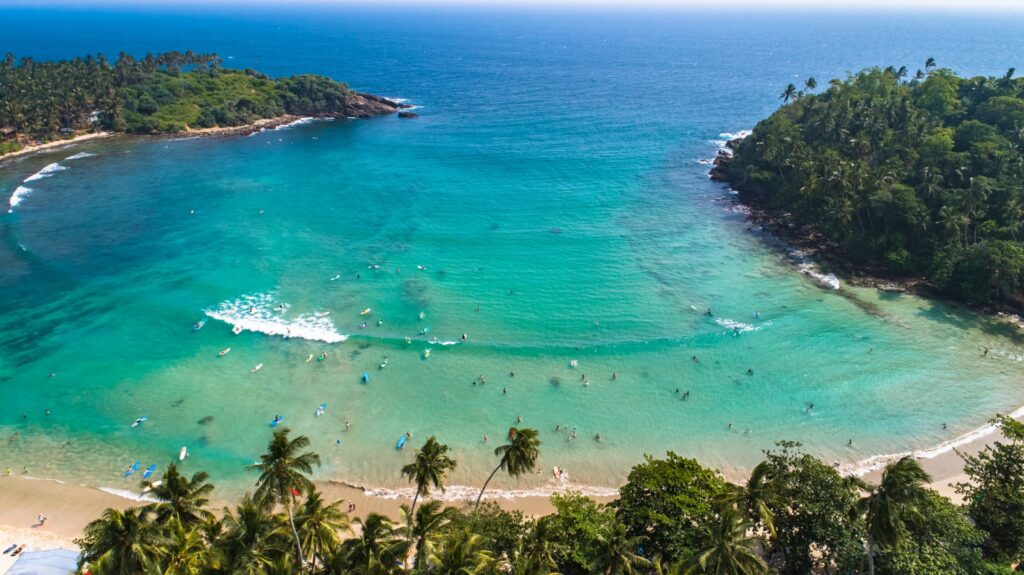
Hiriketiya / Kalametiya
The combination of Hiriketiya Bay’s ocean character and the Kalametiya Bird Sanctuary just inland creates one of the south coast’s most ecologically complete destination pairings, with two entirely different but equally rich natural habitats within walking distance of each other. Kalametiya’s lagoon and mangrove system attracts seasonal flamingo congregations, painted storks, and a wide range of migratory shorebirds, making it one of the south coast’s most productive birdwatching sites. For SiriLanka Tours guests whose interest extends beyond beach relaxation, this combination delivers both coastal beauty and genuine ecological depth in a single stop.

Madu River Wetland
The Madu River’s 900-hectare inland wetland near Balapitiya is a Ramsar-listed ecosystem of international conservation significance – a network of mangrove channels, small islands, and open water bodies harbouring biodiversity that sits entirely incongruously close to the busy southwest coastal resort strip. Exploring by small motorboat at low speed creates the conditions for genuine ecological engagement – herons, kingfishers, water monitors, and the meditative quality of moving slowly through a living wetland. The Cinnamon Island within the system, where traditional hand-peeling of true Ceylon cinnamon has been practised for generations, adds an agricultural and cultural layer to what is primarily a natural experience.

Nuwara Eliya
Nuwara Eliya sits at nearly 2,000 metres in a highland basin entirely encircled by tea estates, its British colonial infrastructure – Tudor guesthouses, a Victorian post office, a racecourse – transplanted into a tropical landscape in a way that creates a genuinely distinctive cognitive dissonance. The surrounding estates produce some of the finest high-grown Orange Pekoe in the Ceylon range, with the elevation and soil chemistry of the Nuwara Eliya basin creating a flavour profile that specialist buyers have valued since the earliest commercial cultivation. For SiriLanka Tours, Nuwara Eliya functions both as a highland base for Horton Plains and scenic rail departures and as a destination of genuine character in its own right.